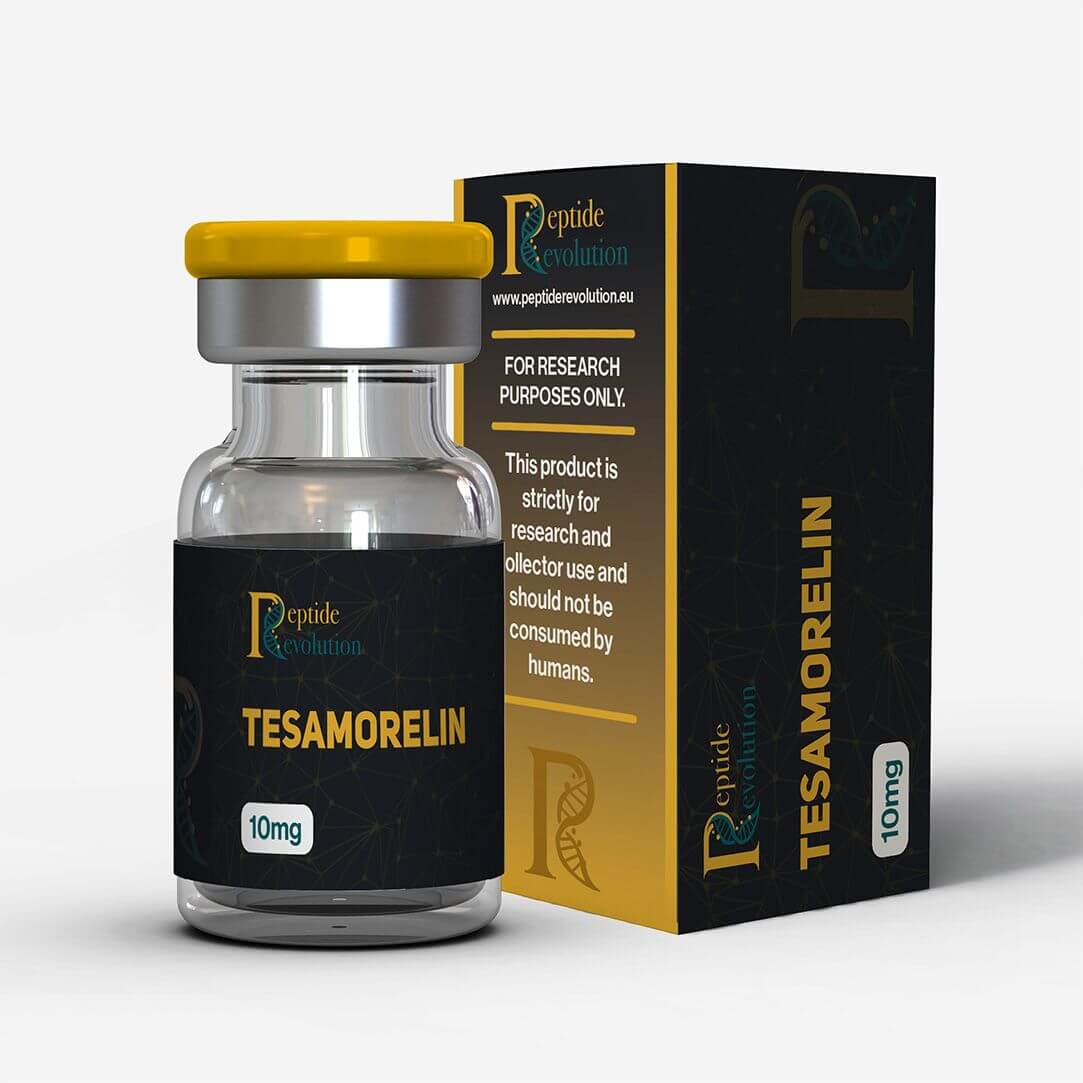
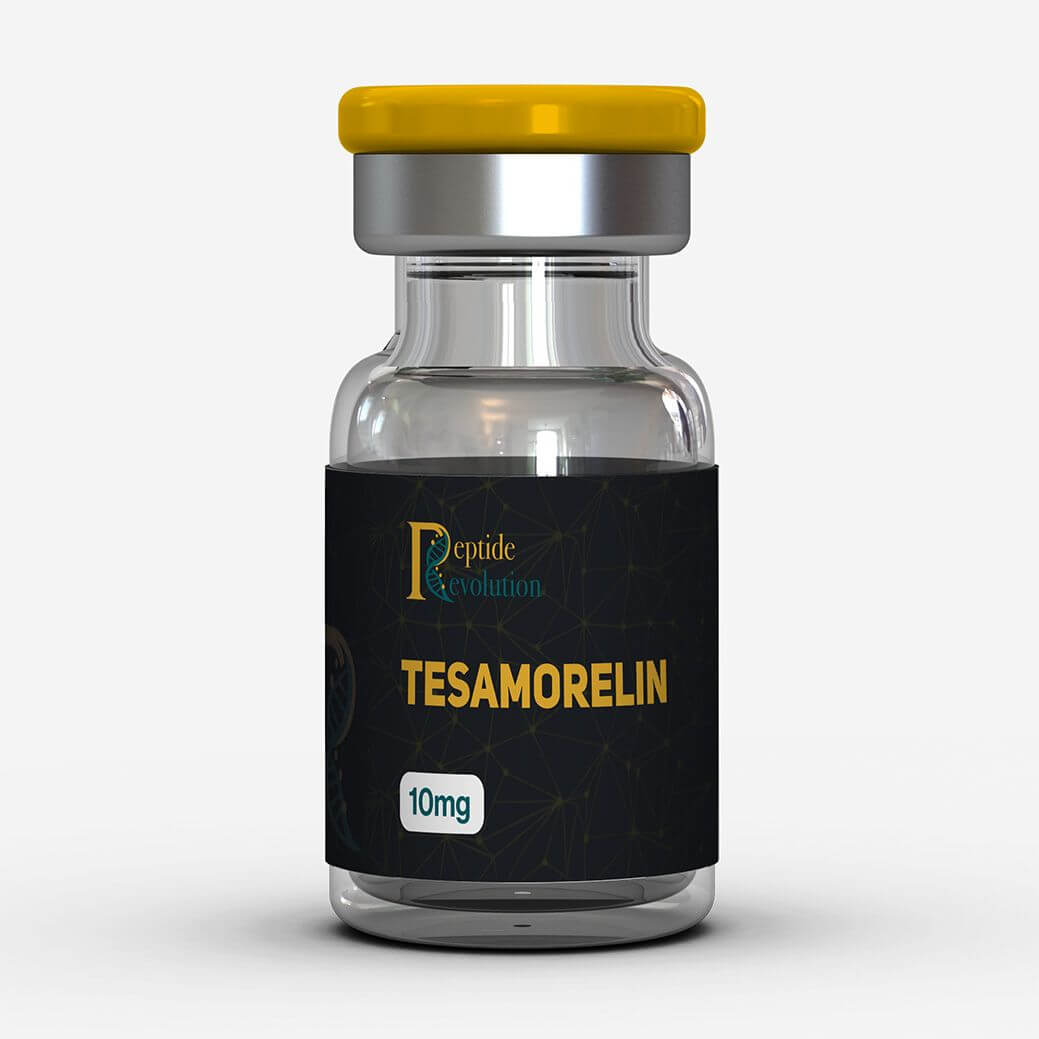
Tesamorelin 10mg

Original price was: 96,30 €.Current price is: 81,85 €.

Find out what benefits peptides have

Discover how peptides can boost recovery, improve skin health, increase energy and support overall performance. Explained simply and clearly in this short video.

Research Peptide

Tesamorelin 10 mg

Research-grade lyophilized peptide powder supplied in a sterile glass vial. Tesamorelin, also known as TH9507, is a synthetic analogue of human Growth Hormone-Releasing Hormone (GHRH), investigated in controlled laboratory settings for its role in GH/IGF-1 axis modulation, visceral adiposity research, metabolic regulation, and lipodystrophy-related models.

Research Use Only
This product is intended strictly for laboratory and scientific investigation. Not for human consumption, therapeutic use, or veterinary application.

Specifications

Purity
99%+ (HPLC, third-party tested)
Form
Lyophilized peptide powder
Content
10 mg Tesamorelin per vial
Packaging
Sterile glass vial with secure closure
Storage
Store lyophilized at 2–8 °C in a dry, desiccated place, protected from light
Molecular Formula
C221H366N72O67S
Molecular Weight
~5135.8 g·mol⁻¹
Sequence
(trans-3-hexenoyl)-Tyr-Ala-Asp-Ala-Ile-Phe-Thr-Asn-Ser-Tyr-Arg-Lys-Val-Leu-Gly-Gln-Leu-Ser-Ala-Arg-Lys-Leu-Leu-Gln-Asp-Ile-Met-Ser-Arg-Gln-Gln-Gly-Glu-Ser-Asn-Gln-Glu-Arg-Gly-Ala-Arg-Ala-Arg-Leu-NH2
Other Names
TH9507, Tesamorelin acetate
CAS Number
218949-48-5

Reconstitution

Bacteriostatic Water 10 ml

For diluting lyophilized peptide powders, use a sterile and suitable research solvent such as bacteriostatic water (BAC), which may help support handling stability and reduce contamination risk.

For convenient laboratory use, see Bacteriostatic Water – 10 ml.

Research Overview

Tesamorelin is a synthetic analogue of human Growth Hormone-Releasing Hormone (GHRH), comprising the full 44-amino acid sequence with an N-terminal trans-3-hexenoyl modification that improves stability and resistance to enzymatic degradation. In laboratory settings, it is investigated for its role in GH release, IGF-1 pathway signaling, visceral adipose tissue dynamics, lipodystrophy-like states, and broader metabolic and neuroendocrine regulation. No therapeutic or clinical claims are made or implied.

Primary Research Areas

GH/IGF-1 Axis & Pituitary Signaling
Experimental use in models evaluating how GHRH analogue stimulation influences pituitary growth hormone release, circulating IGF-1 levels, and downstream anabolic and metabolic signaling.
Visceral Adiposity & Lipodystrophy Models
Preclinical research focused on visceral fat accumulation, abnormal fat distribution, and associated metabolic changes in lipodystrophy-like experimental paradigms.
Metabolic Regulation & Glucose–Lipid Interaction
Research investigating relationships between GH/IGF-1 signaling, glucose handling, lipid metabolism, and insulin sensitivity across metabolic study models.
Body Composition & Tissue Remodeling
Used in studies examining lean mass, fat mass, and tissue remodeling to characterize the effects of chronic GHRH–GH–IGF-1 axis modulation on body composition.
Neuroendocrine & Cognitive Research
Investigated in experimental systems assessing hypothalamic–pituitary regulation, neuroendocrine feedback loops, and cognition-related endpoints in aging or metabolic-stress research.
Laboratory handling note:
Lyophilized peptides are commonly reconstituted using sterile research diluents such as bacteriostatic water (BAC).
RELATED PRODUCTS