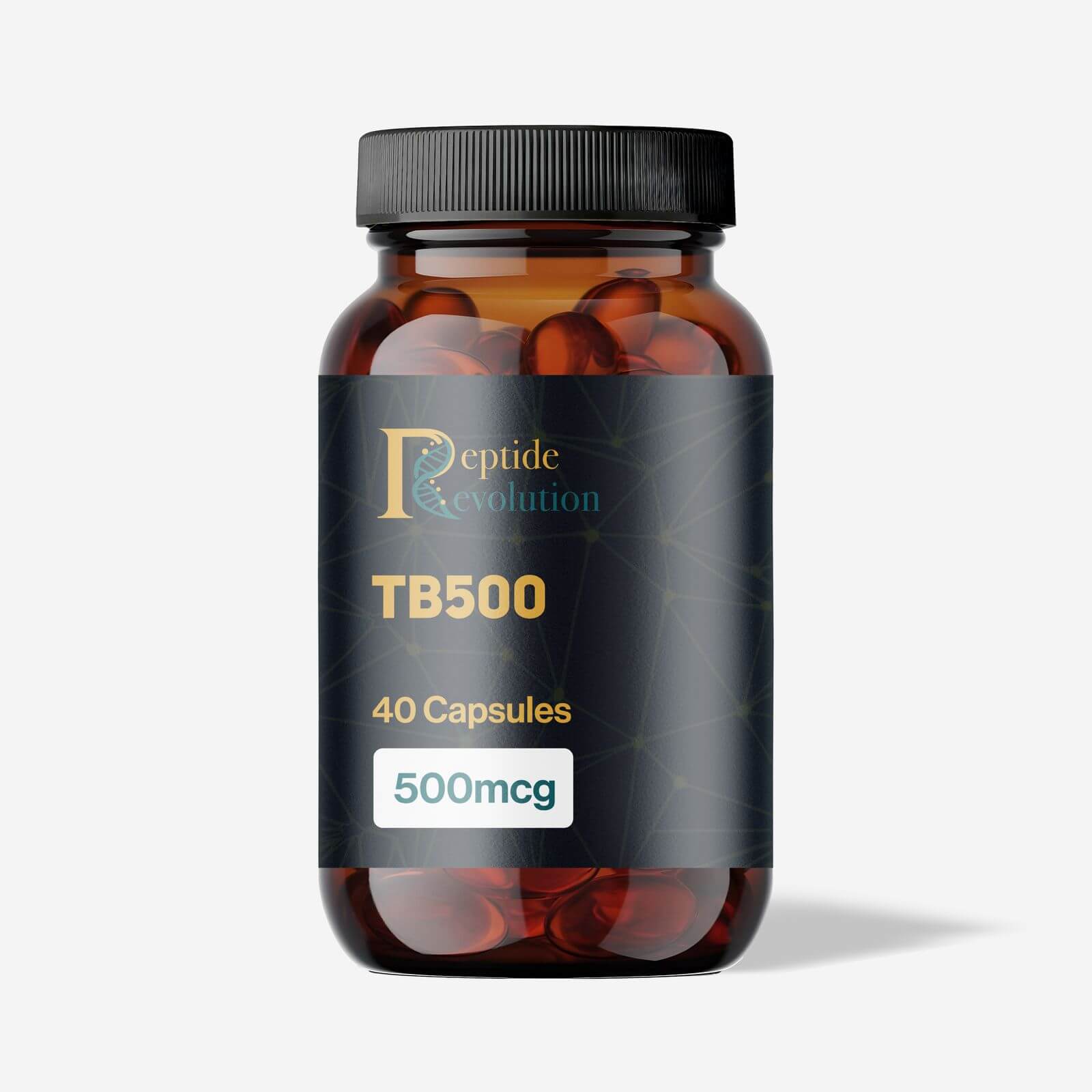
TB-500 (40 capsules)

Find out what benefits peptides have

Discover how peptides can boost recovery, improve skin health, increase energy and support overall performance. Explained simply and clearly in this short video.

Research Peptide Powder

TB-500 – 10 mg

Research-grade lyophilized peptide powder supplied in a sterile glass vial. TB-500 corresponds to
Thymosin Beta-4
and is provided as a single-component research formulation containing 10 mg TB-500 per vial.

This peptide is explored in controlled experimental settings for its relevance to cell migration, actin dynamics, cytoskeletal organization, angiogenesis models, tissue-related laboratory pathways, and inflammatory signaling research.

Research Use Only
This product is intended strictly for laboratory and scientific investigation. Not for human consumption, therapeutic use, or veterinary application.

Specifications

Compound
TB-500 / Thymosin Beta-4
Purity
High-purity research grade, third-party tested
Form
Lyophilized peptide powder
Content
10 mg TB-500 per vial
Packaging
Glass vial with sterile closure
Storage
Store lyophilized at −20 °C, desiccated and protected from light
Molecular Formula
C212H350N56O78S
Molecular Weight
≈ 4963.5 g·mol⁻¹
Peptide Length
43-amino-acid peptide
CAS Number
77591-33-4
Solubility
Soluble in suitable sterile aqueous research diluents
Appearance
White to off-white lyophilized powder

Reconstitution

Bacteriostatic Water 10 ml

In laboratory workflows, lyophilized peptide powders are typically reconstituted using sterile diluents such as bacteriostatic water (BAC), which may support consistent preparation and reliable handling during research procedures.

Use only suitable research-grade solvents and follow standard laboratory handling protocols.

Research Overview

TB-500 is a single-component research peptide corresponding to Thymosin Beta-4, an actin-binding peptide associated with laboratory investigation of
cell migration, cytoskeletal organization, angiogenesis-related models, tissue-associated pathway research, and inflammatory signaling environments.
Its profile makes it relevant for controlled in vitro and experimental research settings studying actin-dependent cellular behavior and pathway interaction. No therapeutic or clinical claims are made or implied.

Primary Research Areas

Tissue-Related Laboratory Models
Investigated in experimental models involving soft-tissue, dermal, and cardiac recovery-related pathways under controlled laboratory conditions.
Angiogenesis & Vascular Research
Used in studies examining new blood-vessel formation, microcirculation-associated pathways, and vascular support models in experimental systems.
Inflammatory Signaling & Cytoprotection Models
Applied in laboratory assays evaluating pro-inflammatory mediators, cellular stress responses, and tissue-protection-related pathway behavior.
Cell Migration & Actin Dynamics
Studied for actin-dependent cell motility, cytoskeletal organization, and peptide-mediated behavior in controlled cellular research models.
Laboratory handling note:
Lyophilized research peptides are commonly handled using sterile research diluents and standard light-protected, desiccated storage conditions.