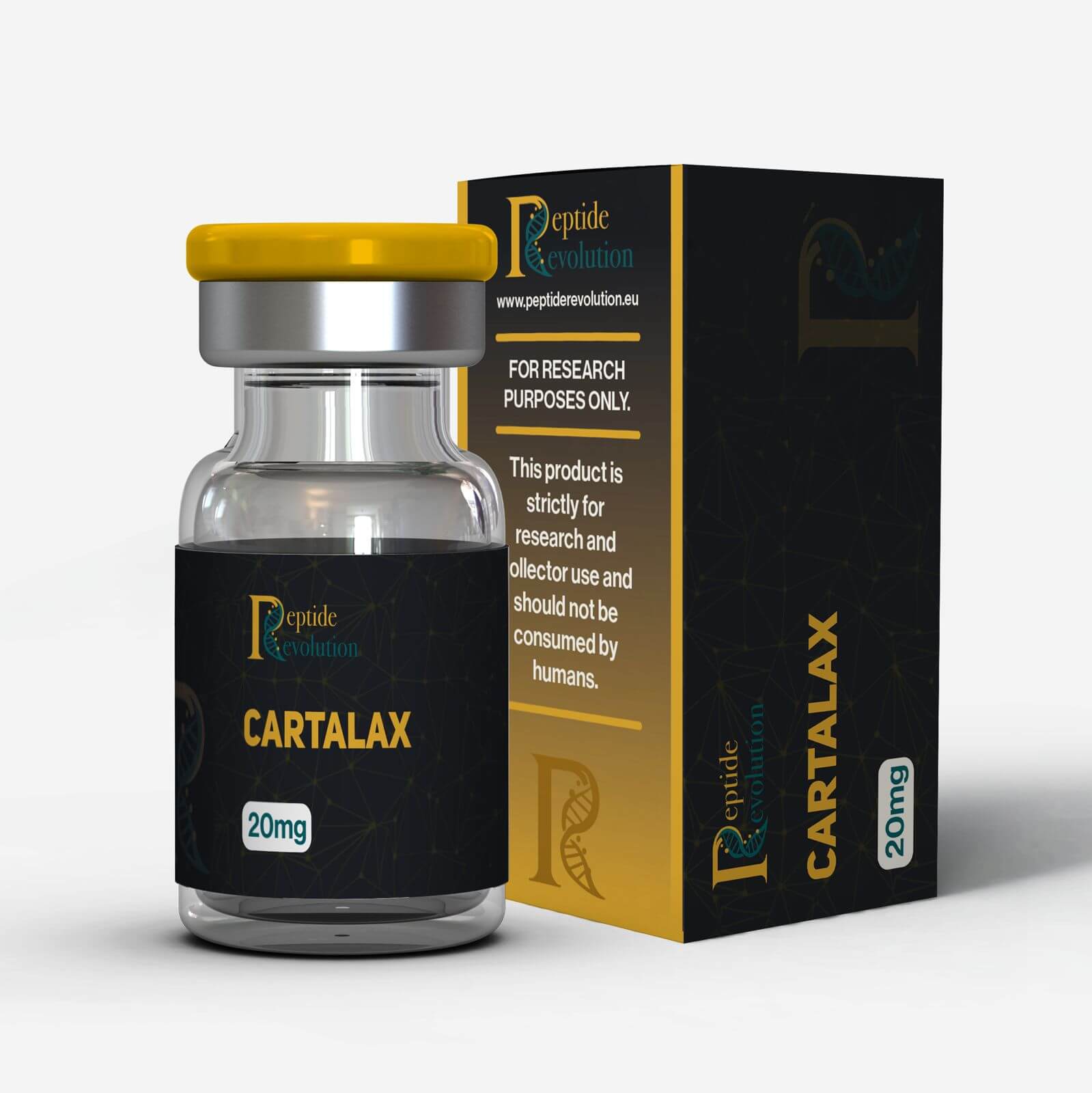
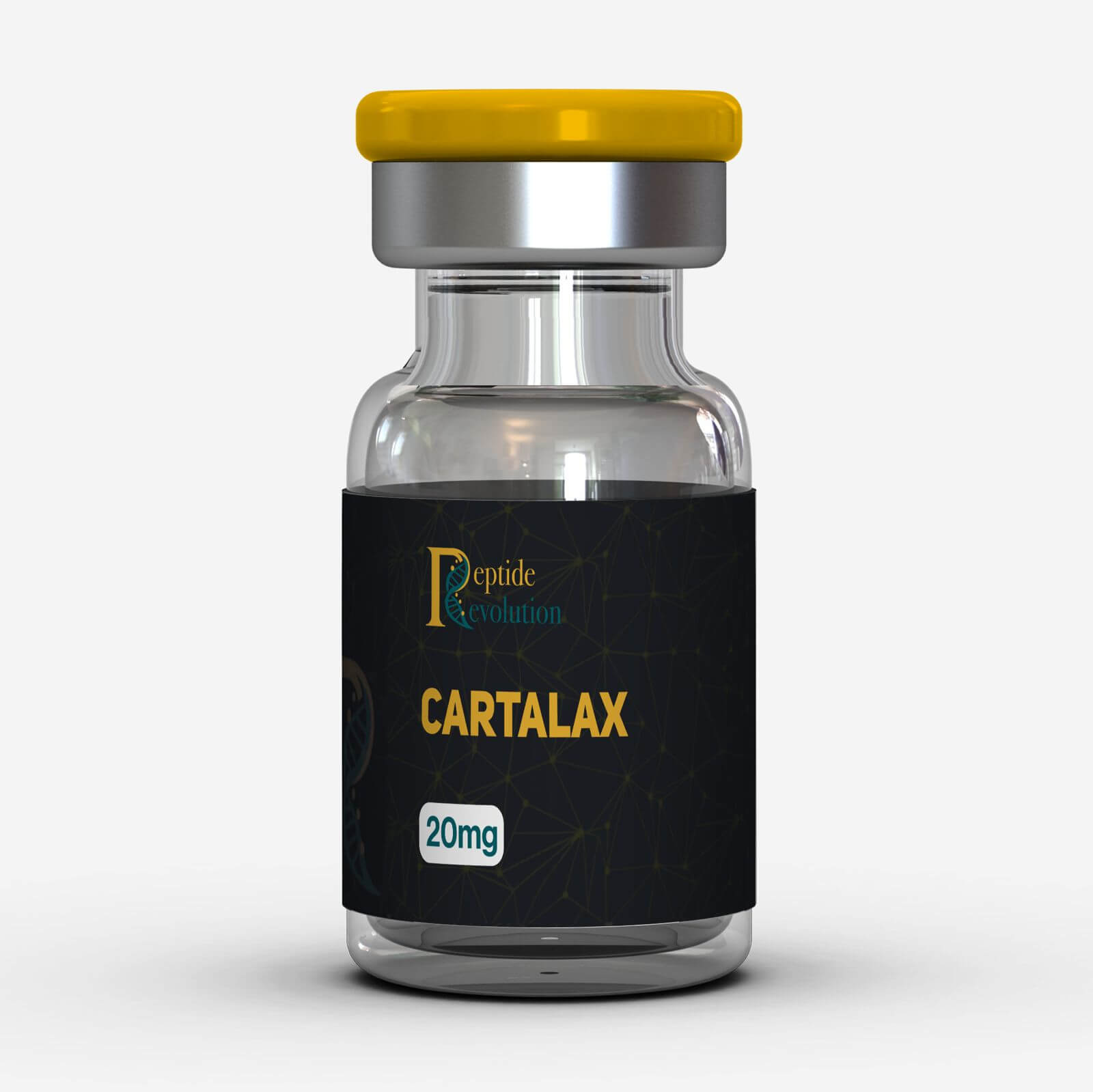
Cartalax 20 mg
Research-grade lyophilized peptide powder supplied in a sterile glass vial. Cartalax is a synthetic tetrapeptide bioregulator with the sequence Ala-Glu-Asp-Gly (AEDG), structurally related to Epithalon and investigated in controlled laboratory settings for its role in musculoskeletal tissue models, telomerase-related mechanisms, and gene-expression regulation.
Specifications
Research Overview
Cartalax (AEDG tetrapeptide) is used in experimental bioregulator research to investigate musculoskeletal tissue homeostasis, telomerase-related mechanisms, and gene-expression profiles in cartilage and bone cells. Laboratory studies focus on how short regulatory peptides may influence cellular proliferation, differentiation, and stress responses in vitro and in vivo research models. No therapeutic or clinical claims are made or implied.
Primary Research Areas
Lyophilized peptides are commonly reconstituted using sterile research diluents such as bacteriostatic water (BAC).
Recommended solvent — Bacteriostatic water

For diluting lyophilized peptide powders, use a sterile and suitable research solvent such as bacteriostatic water (BAC), which may help support handling stability and reduce contamination risk.
For convenient laboratory use, see Bacteriostatic Water – 10 ml.


Retatrutide 10 mg
Original price was: 139,00 €.117,00 €Current price is: 117,00 €.
SLU-PP-332 250 mcg – 60 capsules
89,99 €

L-Carnitine 500 mg/ml – 20 ml
42,99 €