Melanotan 1 10mg

Original price was: 34,00 €.Current price is: 28,90 €.

179 in stock

Find out what benefits peptides have

Discover how peptides can boost recovery, improve skin health, increase energy and support overall performance. Explained simply and clearly in this short video.

Research Peptide

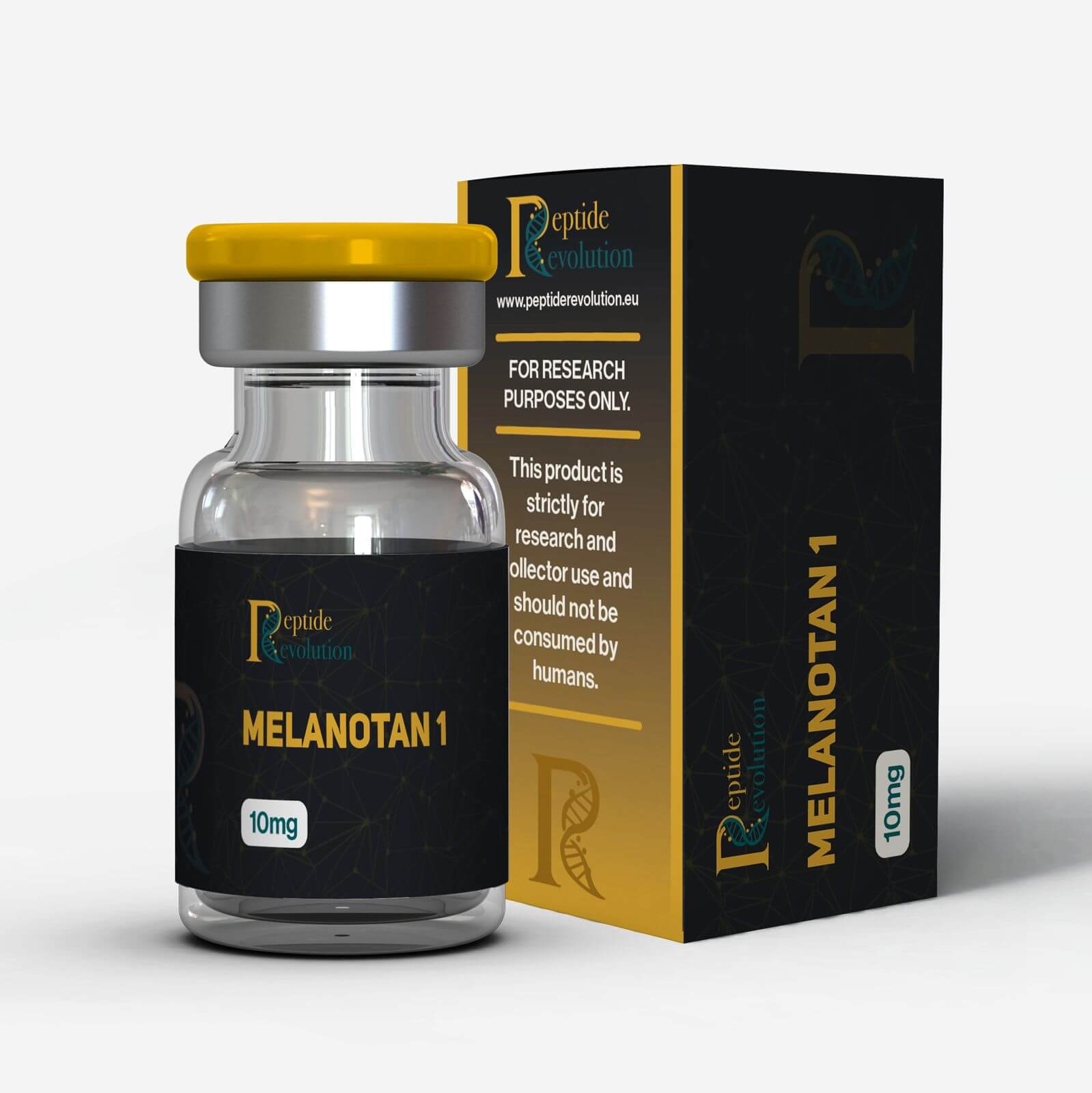
Melanotan 1 10 mg

Research-grade lyophilized peptide powder supplied in a glass vial. Also known as Afamelanotide or MT-1, Melanotan 1 is a synthetic analog of endogenous alpha-Melanocyte-Stimulating Hormone (α-MSH), studied in controlled experimental models of melanocortin receptor signaling, pigmentation biology, melanogenesis, and photobiological response pathways.

Research Use Only
This product is intended strictly for laboratory and scientific investigation. Not for human consumption, therapeutic use, or veterinary application.

Specifications

Purity
High-purity research grade
Form
Lyophilized peptide powder
Content
10 mg Melanotan 1 per vial
Packaging
Glass vial with sterile closure
Storage
Store lyophilized at 2–8 °C, desiccated and protected from light
Molecular Formula
C78H111N21O19
Molecular Weight
~1646.8 g·mol⁻¹
Sequence
Ac-Ser-Tyr-Ser-Nle-Glu-His-D-Phe-Arg-Trp-Gly-Lys-Pro-Val-NH2
Other Names
Melanotan 1, Afamelanotide, MT-1
CAS Number
75921-69-6
Tests
Melanotan 1 test

Reconstitution

Bacteriostatic Water 10 ml

In laboratory workflows, lyophilized research peptides are typically handled with suitable sterile diluents such as bacteriostatic water (BAC), supporting controlled preparation and research-only handling procedures.

For a compatible research-only solvent, see Bacteriostatic Water – 10 ml.

Research Overview

Melanotan 1, also known as Afamelanotide or MT-1, is a synthetic peptide analog of naturally occurring α-melanocyte-stimulating hormone (α-MSH), incorporating the [Nle4, D-Phe7] substitutions to enhance stability and receptor affinity in experimental systems. In controlled in vitro and in vivo research models, Melanotan 1 is used to investigate melanocortin 1 receptor (MC1R) agonism, melanocyte signaling pathways, melanin synthesis, and photobiological responses to ultraviolet (UV) exposure. No therapeutic or clinical claims are made or implied.

Primary Research Areas

Melanocortin Receptor Signaling
Used in studies of MC1R activation, downstream cAMP/PKA pathways, and transcriptional control of pigment-related genes in melanocytic cell models and other systems expressing melanocortin receptors.
Melanogenesis & Pigment Biology
Applied to investigate eumelanin synthesis, melanosome biogenesis, pigment distribution, and regulatory feedback loops in pigmentation biology research.
Photobiology & UV-Response Models
Incorporated into experimental designs exploring cellular responses to UV radiation, including photobiological stress pathways and melanin-mediated modulation of UV-induced damage in controlled models.
Erythropoietic Protoporphyria Research Models
Used as a tool compound in research on porphyrin-related photosensitivity, exploring how melanocortin-based modulation of pigmentation affects experimental EPP models.
DNA Damage & Repair After UV Exposure
Utilized in studies of UV-induced DNA lesions, repair kinetics, and associated oxidative stress markers in relation to increased melanin levels and melanocortin signaling.
Laboratory handling note:
Lyophilized peptides are commonly reconstituted using sterile research diluents such as bacteriostatic water (BAC).

RELATED PRODUCTS