Blog
Semax: Research Guide, Mechanism & Studied Benefits
Semax is a synthetic heptapeptide derived from the ACTH(4–10) fragment, studied for more than three decades in neuroprotection, neurotrophic signalling and cognitive research. This guide covers what Semax is, how its mechanism differs from the hormone it was derived from, which benefits the published literature actually reports, and what specification research-grade material should meet. Written for research context only – no human use protocols are provided.
What is Semax?
Semax is a short synthetic peptide with the sequence Met–Glu–His–Phe–Pro–Gly–Pro (MEHFPGP). Its first four residues reproduce the ACTH(4–7) fragment of adrenocorticotropic hormone; the C–terminal Pro–Gly–Pro tripeptide is a synthetic addition that does not occur in the parent hormone.
That tail is the whole point of the molecule. Native ACTH fragments are broken down by peptidases within minutes, which makes them close to useless as research tools. Adding Pro–Gly–Pro sharply slows enzymatic degradation and extends the window over which the peptide can act. The tripeptide is also released as a metabolite and is itself biologically active, which is why the literature often describes Semax as having an effect that outlasts its measurable presence in plasma.
Semax was developed at the Institute of Molecular Genetics of the Russian Academy of Sciences and has been the subject of Russian and international research since the late 1980s. It is worth stating plainly what that does and does not mean: Semax is a registered medicinal product in Russia, but it holds no marketing authorisation in the EU, UK or United States. Outside Russia it exists purely as a research compound, and that is the only context in which the material sold by Peptide Revolution may be used.
Mechanism: BDNF and neurotrophic signalling
The most consistently reported mechanism for Semax is upregulation of neurotrophic factors — principally brain-derived neurotrophic factor (BDNF) and nerve growth factor (NGF), together with their tyrosine kinase receptors TrkA and TrkB. In rodent hippocampal tissue, changes in BDNF expression have been observed within hours of administration, alongside shifts in the ratio of mature BDNF to its precursor proBDNF. That ratio matters, because the two forms act in opposing directions on neuronal survival and synaptic plasticity.
What follows from the neurotrophic effect
Beyond BDNF itself, published work describes several downstream and parallel actions:
- Monoaminergic modulation — effects on dopaminergic and serotonergic transmission are reported in several rodent models, which is the usual explanation offered for behavioural findings
- Anti-inflammatory gene expression — in ischemia models, Semax shifts expression of genes governing inflammatory and immune response in affected tissue
- Vascular and antioxidant markers — transcriptome studies report changes in genes related to vascular tone and oxidative stress handling
- No corticotropic activity — despite the ACTH origin, Semax does not stimulate cortisol release, which separates its research profile from that of the parent hormone
That last point is the single most important thing to understand about the molecule. Semax was engineered specifically to retain the neurotropic properties of the ACTH fragment while discarding its hormonal ones.
Studied benefits of Semax
The benefits attributed to Semax in the literature fall into four reasonably distinct groups. Each is an observation from a controlled research model, not a claim about what the compound does in people outside such a setting.
Neuroprotection in ischemic models
This is the largest body of work by a wide margin. In rodent models of cerebral ischemia, Semax is investigated for its effect on infarct volume, neurological deficit scores and the expression profile of inflammatory and neurotrophic genes in affected tissue. The proposed explanation combines the BDNF/NGF response with the anti-inflammatory shift described above.
Cognitive and attentional measures
Learning, memory retention and attention tasks in rodents form the second cluster. Findings are generally reported as improvements in acquisition and retention rather than gross changes in behaviour, which is consistent with a neurotrophic rather than stimulant mechanism.
Stress adaptation and hypoxia tolerance
Because Semax lacks corticotropic activity, it is a useful probe for separating the behavioural effects of ACTH fragments from their hormonal ones. Research models examine adaptation to stressors and tolerance of hypoxic conditions.
Optic nerve and retinal research
A smaller literature examines Semax in optic nerve and retinal models, an extension of the general neuroprotection work into a specific tissue where outcomes are comparatively easy to measure.
A caveat worth stating: a substantial share of the Semax literature is Russian-language and predates modern reporting standards. The mechanistic work on BDNF and gene expression is the strongest part of the evidence base; the clinical claims are the weakest, and are the part that does not transfer outside Russia.
Research overview
The table summarises the principal areas Semax has been investigated in. These are observations from published preclinical literature, not outcomes to be expected outside a controlled research setting.
| Research area | Model | Key observation |
|---|---|---|
| Neurotrophic signalling | Rodent, in vitro | Increased BDNF and NGF expression; altered BDNF/proBDNF ratio |
| Cerebral ischemia | Rodent | Reduced infarct volume and neurological deficit in occlusion models |
| Gene expression | Rodent transcriptome | Shift in inflammatory, vascular and antioxidant gene profiles |
| Learning & memory | Rodent | Improved acquisition and retention in maze and avoidance tasks |
| Monoaminergic systems | Rodent | Modulation of dopaminergic and serotonergic transmission |
| Hypoxia & stress | Rodent | Increased tolerance of hypoxic and stress-model conditions |
| Optic nerve | Rodent, clinical (RU) | Neuroprotective effect studied in optic nerve models |
How Semax differs from ACTH and stimulants
Semax is regularly filed alongside compounds it has little in common with. Two distinctions are worth making explicitly.
Against ACTH. Semax shares four amino acids with the hormone and none of its endocrine function. ACTH acts on the adrenal cortex to drive cortisol production; Semax does not, and studies designed to detect corticotropic activity have not found it. Anything that treats Semax as a hormonal compound is misreading the molecule.
Against stimulants. Classical stimulants act acutely on catecholamine release or reuptake, with effects that appear and disappear on a scale of hours. The Semax mechanism is transcriptional — it changes expression of neurotrophic factors, which is slower to appear and outlasts the peptide itself. The two produce different experimental signatures and are not interchangeable in a research design.
Researchers comparing neurotrophic mechanisms across compounds may also want the other research guides in this series, which cover compounds acting through unrelated receptor pathways.
Semax specification
The Semax supplied by Peptide Revolution is intended strictly for laboratory research. Each unit is documented so a study can be traced back to a specific batch.
| Parameter | Specification |
|---|---|
| Compound | Semax |
| Sequence | Met–Glu–His–Phe–Pro–Gly–Pro (MEHFPGP) |
| Class | Synthetic ACTH(4–10) analogue, heptapeptide |
| Identity | Verified by HPLC on batch COA |
| Format | Lyophilized powder, sterile glass vial |
| Unit size | 10 mg per vial |
| Purity | High purity, third-party tested |
| Documentation | Certificate of analysis per batch |
| Intended use | Laboratory research only |
Handling & storage
Lyophilized peptides are far less forgiving than capsule-format compounds. Semax holds specification well as a dry powder and considerably less well once reconstituted.
- Lyophilized — store at 2–8 °C, desiccated and protected from light; the sealed vial is the stable format
- Reconstituted — refrigerate and use within a short window; peptide solutions degrade materially faster than powder
- Freeze–thaw — avoid repeated cycles, which are a common and avoidable source of loss
- Handling — do not shake the vial during reconstitution; direct the solvent down the vial wall
- Documentation — log the batch number and reconstitution date at the start of any protocol
Frequently asked questions
What is Semax used for in research?
Published work investigates Semax in neuroprotection, BDNF and NGF signalling, cognitive and attentional models, hypoxia tolerance and cerebral ischemia. It is a research compound, not an approved treatment or supplement outside Russia.
Is Semax a peptide or a hormone?
A peptide. It is a synthetic heptapeptide derived from the ACTH(4–10) fragment, but the modification removes corticotropic activity. It does not act as a hormone and does not stimulate cortisol release.
How does Semax affect BDNF?
Rodent studies report increased BDNF and NGF expression together with their Trk receptors, and a shift in the ratio of mature BDNF to proBDNF. This transcriptional mechanism is the most consistently replicated finding in the literature.
What is the difference between Semax and N-Acetyl Semax?
N-Acetyl Semax and N-Acetyl Semax amidate are chemically modified variants carrying an acetyl group, and in the amidate case an amidated C-terminus. They are distinct compounds with their own stability profiles and should not be treated as interchangeable with Semax in a study design.
What purity should research-grade Semax have?
High purity confirmed by HPLC on a certificate of analysis referencing the batch number on the vial you received. A generic COA not tied to your batch provides no meaningful assurance.
How should Semax be stored?
Lyophilized at 2–8 °C, desiccated and away from light, in the original sealed vial. Once reconstituted it must be refrigerated and used within a short period.
Is Semax approved for human use?
Not in the EU. Semax is a registered medicinal product in Russia, but it holds no marketing authorisation in the European Union, the United Kingdom or the United States, and is not authorised for human or veterinary use here. It is supplied strictly for in-vitro laboratory research.
Research use disclaimer
All products supplied by Peptide Revolution are intended strictly for in-vitro laboratory research and analytical purposes. They are not medicinal products, food supplements, cosmetics or veterinary preparations, and they are not approved for the diagnosis, treatment or prevention of any condition.
By purchasing, the customer confirms they are a qualified professional or research institution and that the material will be handled in accordance with applicable laws and good laboratory practice. This article summarises published scientific literature for informational purposes and does not constitute medical advice or a usage recommendation.
Explore our products
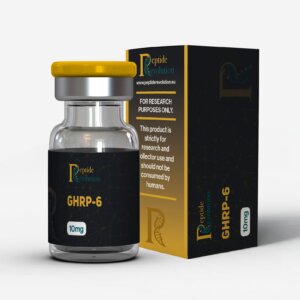
GHRP-6 10 mg
Original price was: 32,00 €.27,20 €Current price is: 27,20 €.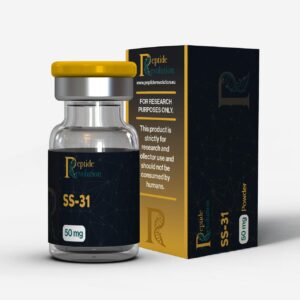
SS-31 50 mg
Original price was: 124,99 €.106,24 €Current price is: 106,24 €.
Tesamorelin 10 mg
Original price was: 96,30 €.81,85 €Current price is: 81,85 €.