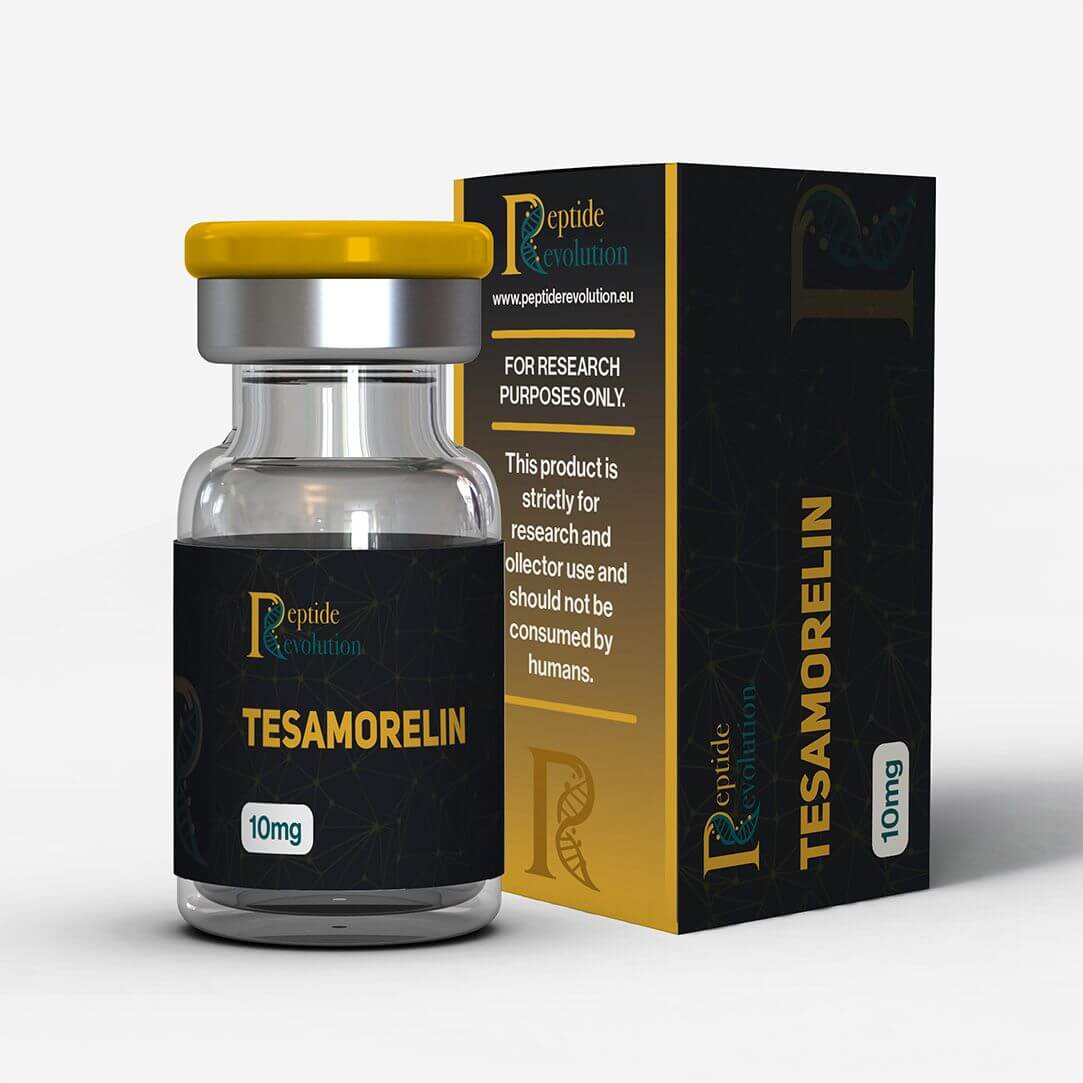
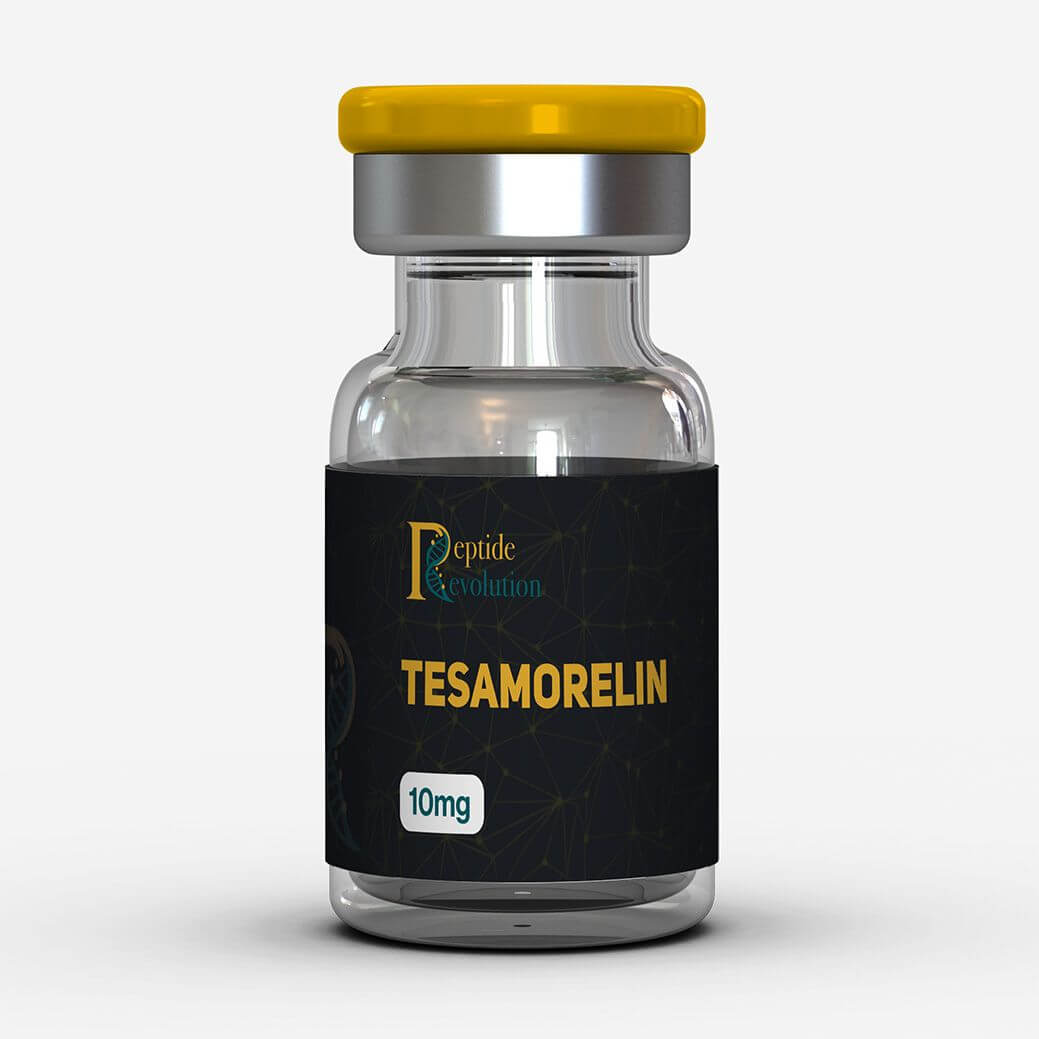
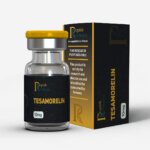
Tesamorelin 10 mg

Original price was: 96,30 €.Current price is: 81,85 €.

Find out what benefits peptides have

Discover how peptides can boost recovery, improve skin health, increase energy and support overall performance. Explained simply and clearly in this short video.

Third-party tested

Laboratory test for this product

View the certificate of analysis and laboratory verification for this product.

View laboratory test
Research Peptide

Tesamorelin 10 mg

Research-grade lyophilized peptide powder supplied in a sterile glass vial. Tesamorelin, also known as TH9507, is a synthetic analogue of human Growth Hormone-Releasing Hormone (GHRH), investigated in controlled laboratory settings for its role in GH/IGF-1 axis modulation, visceral adiposity research, metabolic regulation, and lipodystrophy-related models.

Research Use Only
This product is intended strictly for laboratory and scientific investigation. Not for human consumption, therapeutic use, or veterinary application.

Specifications

Purity
99%+ (HPLC, third-party tested)
Form
Lyophilized peptide powder
Content
10 mg Tesamorelin per vial
Packaging
Sterile glass vial with secure closure
Storage
Store lyophilized at 2–8 °C in a dry, desiccated place, protected from light
Molecular Formula
C221H366N72O67S
Molecular Weight
~5135.8 g·mol⁻¹
Sequence
(trans-3-hexenoyl)-Tyr-Ala-Asp-Ala-Ile-Phe-Thr-Asn-Ser-Tyr-Arg-Lys-Val-Leu-Gly-Gln-Leu-Ser-Ala-Arg-Lys-Leu-Leu-Gln-Asp-Ile-Met-Ser-Arg-Gln-Gln-Gly-Glu-Ser-Asn-Gln-Glu-Arg-Gly-Ala-Arg-Ala-Arg-Leu-NH2
Other Names
TH9507, Tesamorelin acetate
CAS Number
218949-48-5

Research Overview

Tesamorelin is a synthetic analogue of human Growth Hormone-Releasing Hormone (GHRH), comprising the full 44-amino acid sequence with an N-terminal trans-3-hexenoyl modification that improves stability and resistance to enzymatic degradation. In laboratory settings, it is investigated for its role in GH release, IGF-1 pathway signaling, visceral adipose tissue dynamics, lipodystrophy-like states, and broader metabolic and neuroendocrine regulation. No therapeutic or clinical claims are made or implied.

Primary Research Areas

GH/IGF-1 Axis & Pituitary Signaling
Experimental use in models evaluating how GHRH analogue stimulation influences pituitary growth hormone release, circulating IGF-1 levels, and downstream anabolic and metabolic signaling.
Visceral Adiposity & Lipodystrophy Models
Preclinical research focused on visceral fat accumulation, abnormal fat distribution, and associated metabolic changes in lipodystrophy-like experimental paradigms.
Metabolic Regulation & Glucose–Lipid Interaction
Research investigating relationships between GH/IGF-1 signaling, glucose handling, lipid metabolism, and insulin sensitivity across metabolic study models.
Body Composition & Tissue Remodeling
Used in studies examining lean mass, fat mass, and tissue remodeling to characterize the effects of chronic GHRH–GH–IGF-1 axis modulation on body composition.
Neuroendocrine & Cognitive Research
Investigated in experimental systems assessing hypothalamic–pituitary regulation, neuroendocrine feedback loops, and cognition-related endpoints in aging or metabolic-stress research.
Laboratory handling note:
Lyophilized peptides are commonly reconstituted using sterile research diluents such as bacteriostatic water (BAC).
Reconstitution — different solvent

Recommended solvent — 0.6% Acetic acid, not bacteriostatic water

Acetic Acid 0.6% – 10 ml solution - Peptide Revolution

This peptide has limited solubility in neutral water. Laboratory practice recommends a mildly acidic solvent — 0.6% acetic acid — which supports complete dissolution and helps protect oxidation-sensitive residues.

Bacteriostatic water (BAC) is not the recommended solvent for this peptide.

Recommended: reconstitute with 3 ml of 0.6% acetic acid.

For convenient laboratory use, see Acetic Acid 0.6% – 10 ml.

RELATED PRODUCTS